Summary / Overview
- Mumps is an acute viral illness caused by the mumps virus (a Paramyxovirus), primarily affecting the salivary glands — especially the parotid glands.
- It spreads via respiratory droplets and has a high attack rate in unvaccinated populations.
- Complications include orchitis, meningitis, sensorineural hearing loss, and pancreatitis.
Etiology
- Mumps is caused by the mumps virus, a single-stranded, negative-sense RNA virus of the Paramyxoviridae family (genus Orthorubulavirus).
Pathogenesis
- Initial viral replication occurs in the upper respiratory epithelium and regional lymph nodes.
- Viremia develops within days and disseminates the virus to glandular, neural, and other target tissues.
- • Testes: seminiferous tubule inflammation → edema and pressure-induced ischemia → orchitis.
Symptoms
- Prodromal symptoms include low-grade fever, malaise, headache, and myalgia.
- Earache and pain aggravated by chewing are classic early features.
Signs
- Tender, enlarged parotid gland — often starting unilaterally.
- Obliteration of the angle of the jaw due to parotid swelling.
Clinical Features
- Parotitis is the hallmark — painful swelling of one or both parotid glands.
- Symptoms peak within 1–3 days after gland swelling begins.
Investigations
- Diagnosis is usually clinical — parotitis with compatible symptoms.
- Laboratory confirmation needed only in atypical, complicated, or public-health cases.
Differential Diagnosis
- Consider other causes of parotid swelling and febrile illness.
Complications
- Most complications occur in post-pubertal adolescents and adults.
Treatment
- There is no specific antiviral therapy for mumps.
- Scrotal support and elevation
- Patient should be isolated for at least 5 days after onset of parotitis.
- Post-exposure vaccination can reduce future risk but does not treat active infection.
Prevention
- The MMR vaccine is the most effective method of preventing mumps.
- Isolate infected individuals for 5 days after onset of parotitis.
Serotypes / Subtypes
- Mumps virus has only ONE serotype.
- Genotype differences do NOT change severity, symptoms, or vaccine effectiveness.
Pathology
- Paramyxovirus (Mumps virus) is an enveloped, negative-sense, single-stranded RNA virus.
- No frank suppuration (pus) unless secondary bacterial infection.
- This is why mumps is a known cause of unilateral sensorineural deafness.
- Pathological damage is related to edema and inflammation rather than direct cytopathic effect.
Radiology / Imaging
- Useful to differentiate from abscess or sialolithiasis (stones).
- Mumps orchitis usually shows increased blood flow.
- Imaging is supportive only—diagnosis relies mainly on clinical signs (parotid swelling, orchitis), PCR from saliva, or serology.
Notes / Teaching points
- Mumps virus is a paramyxovirus — the same family that includes measles — but it causes a very different pattern of illness.
- The most common complication of mumps in post-pubertal males is orchitis.
Other
- Why does mumps cause parotitis?
- Why does mumps cause orchitis?
- Why is orchitis mainly in post-pubertal males?
- Why does only some patients develop orchitis?
- Can mumps orchitis cause infertility?
- Why does mumps cause pancreatitis?
- Why only some develop pancreatitis?
- Why can mumps cause meningitis or encephalitis?
- Why does mumps cause hearing loss?
- Why does mumps rarely cause complications in vaccinated children?
Parotitis is the hallmark — painful swelling of one or both parotid glands.
Symptoms peak within 1–3 days after gland swelling begins.
Prodromal symptoms preceding swelling:
• Low-grade fever
• Malaise
• Headache
• Myalgia
• Anorexia
Glandular features:
• Parotid pain worsens with chewing, sour foods, or acidic drinks.
• Parotid swelling often progresses to the second gland (bilateral).
• Submandibular or sublingual gland involvement may occur (10%–15%).
• Ear lobe may be displaced upward and outward due to parotid enlargement.
Systemic features:
• Mild upper respiratory symptoms may occur.
• Dry mouth due to reduced salivary secretion.
Complication-related features:
• Orchitis — testicular pain, swelling, tenderness, fever (usually unilateral).
• Oophoritis — pelvic pain, fever (less common).
• Pancreatitis — epigastric pain radiating to back, nausea, vomiting.
• Aseptic meningitis — headache, photophobia, neck stiffness.
• Sensorineural hearing loss (rare but characteristic).
Most complications occur in post-pubertal adolescents and adults.
Orchitis (most common complication in males)
• Typically unilateral but can be bilateral.
• Testicular pain, swelling, tenderness.
• Rarely causes infertility; subfertility is more common.
Oophoritis & mastitis (in females)
• Lower abdominal pain, pelvic discomfort.
• Breast tenderness and swelling.
Meningitis / Aseptic meningitis
• Headache, neck stiffness, photophobia.
• Often mild and self-limiting.
Encephalitis (rare but serious)
• Altered sensorium, seizures, focal deficits.
• Can lead to permanent neurological sequelae.
Sensorineural hearing loss
• Sudden onset, usually unilateral.
• May be permanent (due to cochlear neuritis or labyrinthitis).
Pancreatitis
• Acute epigastric pain radiating to the back.
• Elevated serum amylase/lipase.
Thyroiditis
• Painful swelling of thyroid, transient hyper- or hypothyroidism.
Myocarditis & pericarditis (rare)
• Chest pain, palpitations, arrhythmias.
Arthritis / arthralgia
• Transient joint involvement, usually large joints.
Pregnancy-related
• Mumps infection in early pregnancy may increase risk of miscarriage (not teratogenic like rubella).
Other rare complications
• Nephritis
• Hemolytic anemia
• Thrombocytopenia
Consider other causes of parotid swelling and febrile illness.
Viral causes:
• Parainfluenza virus (most common non-mumps cause of parotitis)
• Influenza A
• Adenovirus
• Epstein–Barr virus (EBV)
• Coxsackievirus
• HIV-related parotitis (acute or chronic)
Bacterial causes:
• Acute suppurative bacterial parotitis (Staphylococcus aureus, anaerobes)
– Painful, unilateral, purulent discharge from Stensen duct
– High fever, toxic look
• Dental/periodontal infections
Non-infectious:
• Obstructive sialadenitis (salivary duct stone)
• Sjögren’s syndrome (chronic, dry mouth/eyes)
• Sarcoidosis (bilateral parotid enlargement)
• Drug-induced parotitis (iodides, phenylbutazone)
• Juvenile recurrent parotitis
Systemic conditions:
• Kawasaki disease (fever, mucosal changes, cervical lymphadenopathy)
• Lymphoma (persistent, painless gland enlargement)
Mumps is caused by the mumps virus, a single-stranded, negative-sense RNA virus of the Paramyxoviridae family (genus Orthorubulavirus).
Transmission occurs primarily through respiratory droplets, saliva, and direct contact with contaminated surfaces.
The virus shows tropism for glandular and neural tissue, especially the parotid glands, pancreas, testes, ovaries, and CNS.
Humans are the only natural host; no animal reservoir exists.
Infection confers lifelong immunity.
References
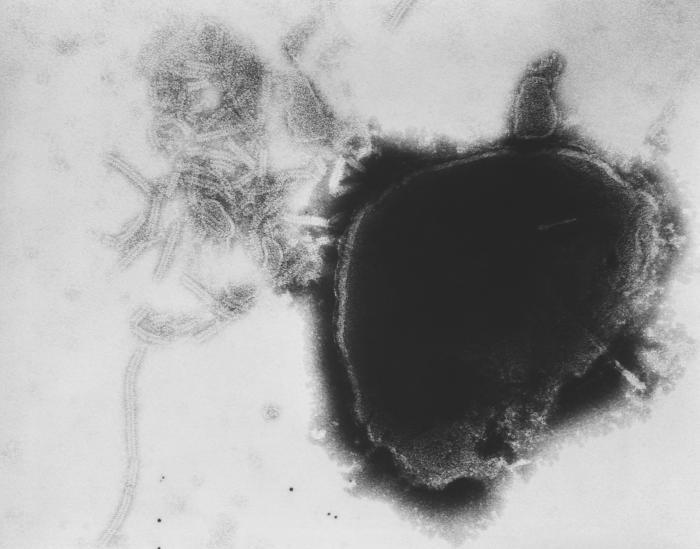
Statpearls Mumps virus image Electron microscope
Dr Sankaran • 2025-11-17 17:26:34
Diagnosis is usually clinical — parotitis with compatible symptoms.
Laboratory confirmation needed only in atypical, complicated, or public-health cases.
Routine tests:
• CBC — may show normal count or mild leukopenia with lymphocytosis.
• ESR/CRP — usually normal or mildly elevated.
Virology / Serology:
• Serum IgM antibodies to mumps virus
– Appear ~5 days after symptom onset
– False negatives common early or in vaccinated individuals
• IgG rise in paired sera (acute vs convalescent) helpful when IgM negative.
• RT-PCR from buccal/oral swab — highly sensitive, especially within 3 days of parotitis.
Other tests based on complications:
• CSF analysis (if meningitis suspected):
– Lymphocytic pleocytosis, mildly elevated protein, normal glucose.
• Serum amylase/lipase (pancreatitis): can show elevation.
• Testicular ultrasound (orchitis):
– Enlarged hypoechoic testis, ↑ vascularity or variable patterns.
Imaging:
• Usually not required.
• Ultrasound may help confirm salivary gland enlargement when diagnosis unclear.
Mumps virus is a paramyxovirus — the same family that includes measles — but it causes a very different pattern of illness.
What is parotitis?
• Parotitis = inflammation of the parotid salivary gland.
• In mumps, it is usually bilateral but may start on one side.
• The swelling pushes the earlobe upward and outward.
Why is mumps worse in adults?
• Adults mount a stronger inflammatory response.
• They get more systemic complications—especially orchitis and pancreatitis.
Why does mumps cause orchitis?
• Mumps virus has a special affinity for glandular and nerve tissues.
• Testicular involvement causes severe pain, swelling, and temporary infertility.
Can mumps make boys sterile?
• It is rare.
• Only severe bilateral orchitis increases risk of infertility.
• Most recover completely in 2–4 weeks.
Why does mumps affect pancreas (pancreatitis)?
• The virus infects exocrine glands (salivary + pancreas).
• Leads to epigastric pain, vomiting, ↑amylase.
• Usually mild and self-limited.
Why are vaccines important for mumps?
• Prevents outbreaks in schools/hostels.
• Reduces complications like orchitis, meningitis, hearing loss.
How to differentiate mumps parotitis from bacterial parotitis?
• Mumps: gradual swelling, bilateral, low fever, no pus.
• Bacterial: severe pain, high fever, tender gland with pus from Stensen duct.
Duration of contagiousness
• 2 days before parotid swelling → 5 days after swelling.
• Isolation is recommended for **5 days after onset of parotitis**.
Does mumps cause rash?
• No. Mumps is a “non-rash” viral illness (unlike measles/rubella).
Classic exam question
The most common complication of mumps in post-pubertal males is orchitis.
Why does mumps cause parotitis?
Mumps virus has a preference for glandular epithelium.
The parotid gland is the largest salivary gland → highest viral replication → painful swelling.
Why does mumps cause orchitis?
Testicular tissue (seminiferous tubules) has receptors allowing mumps virus to enter.
The tight testicular capsule increases pressure when inflamed → severe pain and swelling.
Why is orchitis mainly in post-pubertal males?
• After puberty, testicular tissue is more metabolically active, increasing viral replication.
• Prepubertal testes have less vascularity, so virus reaches in lower amounts.
Why does only some patients develop orchitis?
Because of host-factor differences:
• Genetics
• Strength of cell-mediated immunity
• Amount of viral load
• Age (adults >> children)
• Vaccination history (partial immunity reduces systemic spread)
Can mumps orchitis cause infertility?
Rarely.
Only severe **bilateral** orchitis affecting seminiferous tubules may reduce sperm count temporarily.
Permanent infertility is very uncommon.
Why does mumps cause pancreatitis?
The pancreas is also an exocrine gland → similar epithelial receptors as salivary glands.
Virus replicates in acinar cells → inflammation → abdominal pain + raised amylase.
Why only some develop pancreatitis?
Pancreatic involvement depends on:
• High viremia
• Weaker immune control
• Genetic susceptibility to glandular tropism
• Adults affected more than children
Why can mumps cause meningitis or encephalitis?
Mumps is neurotropic.
The virus can cross the blood–brain barrier during viremia → mild meningitis or rarely encephalitis.
Why does mumps cause hearing loss?
Due to inflammation of the cochlea or auditory nerve.
Usually unilateral and temporary, but can be permanent (rare).
Why does mumps rarely cause complications in vaccinated children?
The vaccine induces strong **cell-mediated immunity**, limiting systemic spread of the virus →
so the infection (if it occurs) stays mild and localized.
Why does parotitis push the earlobe upwards?
The swollen parotid gland sits below and behind the earlobe →
swelling lifts the earlobe upward and outward (classic exam point).
Why does chewing worsen parotid pain?
Parotid gland secretes saliva through Stensen duct.
Salivation during chewing increases pressure → sharp pain.
Why no pus in mumps parotitis?
Because it is viral.
There is inflammation but no bacterial colonization → duct opening is clean.
How to clinically differentiate mumps parotitis from bacterial parotitis?
Mumps: bilateral, gradual swelling, mild fever, no pus.
Bacterial: high fever, unilateral, very tender, pus from Stensen duct.
Why is isolation required for 5 days?
Peak viral shedding happens 1–2 days before swelling and continues for 5 days after →
hence 5-day isolation prevents spread.
Why no rash in mumps?
Mumps does not cause immune-complex deposition in skin (unlike measles/rubella).
Initial viral replication occurs in the upper respiratory epithelium and regional lymph nodes.
Viremia develops within days and disseminates the virus to glandular, neural, and other target tissues.
The virus infects ductal epithelial cells of salivary glands → cellular swelling, necrosis, and interstitial edema → **parotitis**.
Secondary tissue involvement:
• Testes: seminiferous tubule inflammation → edema and pressure-induced ischemia → orchitis.
• Pancreas: acinar inflammation → transient pancreatitis.
• CNS: meningeal irritation or direct neuronal invasion → aseptic meningitis/encephalitis.
Immune response is primarily cell-mediated; symptoms coincide with peak viremia.
Paramyxovirus (Mumps virus) is an enveloped, negative-sense, single-stranded RNA virus.
Target organs
• Primarily affects **salivary glands** (especially parotid).
• Can spread hematogenously to **testes, ovaries, pancreas, CNS, and inner ear**.
Salivary gland pathology
• Interstitial **edema** and **mononuclear inflammatory infiltrate** (lymphocytes, plasma cells).
• Acinar cell necrosis may occur in severe cases.
• Ductal epithelial hyperplasia may be seen.
No frank suppuration (pus) unless secondary bacterial infection.
Orchitis pathology
• Edema and **interstitial inflammation** in testes.
• Compression of seminiferous tubules can lead to **testicular atrophy**.
• Fibrosis may follow recurrent or severe orchitis.
Pancreas involvement
• Interstitial pancreatitis with mononuclear infiltrate.
• Mild acinar injury.
CNS pathology
• Meningeal inflammation predominantly lymphocytic.
• No characteristic inclusion bodies.
Inner ear (sensorineural hearing loss)
• Damage to cochlear hair cells and stria vascularis.
This is why mumps is a known cause of unilateral sensorineural deafness.
Clinical relevance
Pathological damage is related to edema and inflammation rather than direct cytopathic effect.
The MMR vaccine is the most effective method of preventing mumps.
MMR Vaccination
• Two-dose schedule gives ~88% protection.
• Given at 9–12 months and again at 15–18 months (or per national schedule).
• Adults without immunity should also receive 1–2 doses.
Post-exposure measures
• Vaccination after exposure does *not* prevent disease in the current episode but protects future immunity.
• Immunoglobulin is NOT effective for mumps prophylaxis.
Isolation
Isolate infected individuals for 5 days after onset of parotitis.
• Avoid close contact, especially with pregnant women and the immunocompromised.
• Exclude from school/work until the isolation period is completed.
General measures
• Good respiratory hygiene (mask, cough etiquette).
• Handwashing with soap and water.
• Avoid sharing utensils, cups, towels.
Community prevention
• Maintaining high vaccination coverage prevents outbreaks.
• Rapid identification and reporting of suspected cases during outbreaks.
Mumps is primarily a **clinical diagnosis**, and imaging is usually **not required**.
However, in atypical, severe, or complicated cases, the following radiologic findings may be seen:
Ultrasound – Parotid gland
• **Enlarged parotid gland** with hypoechoic, heterogeneous texture.
• Increased **vascularity** on Doppler (reflects active inflammation).
• Surrounding soft-tissue edema may be visible.
Useful to differentiate from abscess or sialolithiasis (stones).
Ultrasound – Testes (Orchitis)
• Enlarged, hypoechoic testis with increased vascular flow.
• Scrotal wall thickening and reactive hydrocele may be present.
• Color Doppler helps differentiate from **torsion** (torsion → decreased flow).
Mumps orchitis usually shows increased blood flow.
CT / MRI – Rarely needed
• CT neck may show diffuse parotid enlargement and periparotid fat stranding.
• MRI can demonstrate glandular edema but rarely changes management.
Chest X-ray
• Usually **normal**.
• Used only if there is concern for complications or alternative (e.g., bacterial pneumonia).
Neuroimaging (if CNS involvement suspected)
• Typically normal in mumps meningitis/encephalitis.
• MRI may show mild meningeal enhancement in rare severe cases.
Key Point
Imaging is supportive only—diagnosis relies mainly on clinical signs (parotid swelling, orchitis), PCR from saliva, or serology.
Mumps virus has only ONE serotype.
Genotypes
• Although only one serotype exists, the virus has **multiple genotypes** (A–N).
• These genotypes differ genetically but **do not affect immunity** — infection or vaccination with one protects against all.
Epidemiology
• Genotype G is most commonly detected in recent global outbreaks.
• Genotype C and D are also reported in parts of Asia.
Clinical significance
Genotype differences do NOT change severity, symptoms, or vaccine effectiveness.
Tender, enlarged parotid gland — often starting unilaterally.
Obliteration of the angle of the jaw due to parotid swelling.
Erythema and warmth over parotid region (may be mild).
Stensen duct erythema and edema; decreased saliva from duct opening.
Bilateral parotitis (appears in 70–90% within 1–5 days).
Submandibular or sublingual gland enlargement in some cases.
Fever (usually low to moderate).
Signs of complications when present:
• Orchitis — tender enlarged testis, scrotal edema, erythema.
• Meningitis — neck stiffness, photophobia.
• Pancreatitis — epigastric tenderness.
Mumps is an acute viral illness caused by the mumps virus (a Paramyxovirus), primarily affecting the salivary glands — especially the parotid glands.
It spreads via respiratory droplets and has a high attack rate in unvaccinated populations.
Complications include orchitis, meningitis, sensorineural hearing loss, and pancreatitis.
Widespread vaccination (MMR) has drastically reduced global incidence.
Prodromal symptoms include low-grade fever, malaise, headache, and myalgia.
Earache and pain aggravated by chewing are classic early features.
Parotid gland swelling (usually unilateral initially, may become bilateral).
Pain over the parotid region — worsens with sour foods (stimulates salivation).
Dry mouth and decreased appetite.
Fever may persist for 3–5 days.
In adolescents/adults: more systemic symptoms (higher fever, fatigue).
Possible involvement of other glands:
• Testicular pain or swelling (orchitis)
• Lower abdominal pain (oophoritis)
• Epigastric pain (pancreatitis)
There is no specific antiviral therapy for mumps.
Supportive care is the mainstay of treatment.
• Adequate hydration.
• Bed rest during febrile phase.
• Soft diet if chewing is painful.
Analgesics & antipyretics
• Paracetamol or NSAIDs for fever and pain.
• Avoid aspirin in children (risk of Reye syndrome).
Orchitis management
Scrotal support and elevation
• Ice packs to reduce swelling.
• NSAIDs for pain.
• In severe cases: short course of corticosteroids may help (controversial; limited evidence).
Management of complications
• Meningitis/encephalitis → hospital admission, supportive neuro care.
• Pancreatitis → IV fluids, bowel rest, analgesia.
• Hearing loss → urgent ENT evaluation.
Isolation precautions
Patient should be isolated for at least 5 days after onset of parotitis.
Vaccination (MMR)
Post-exposure vaccination can reduce future risk but does not treat active infection.
Antibiotics
• Not indicated unless secondary bacterial infection is suspected.
Nutritional support
• Encourage adequate oral intake, avoid acidic foods (increase salivary pain).
Tap a card to view full section
Use the coloured cards above (Etiology, Symptoms, Treatment, etc.).